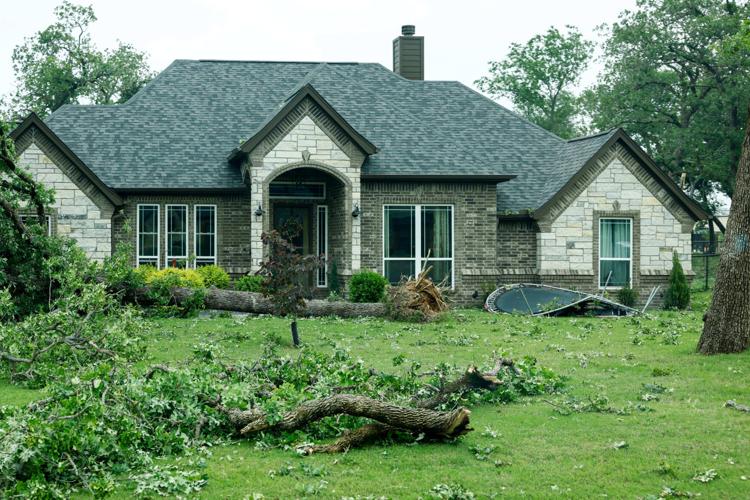
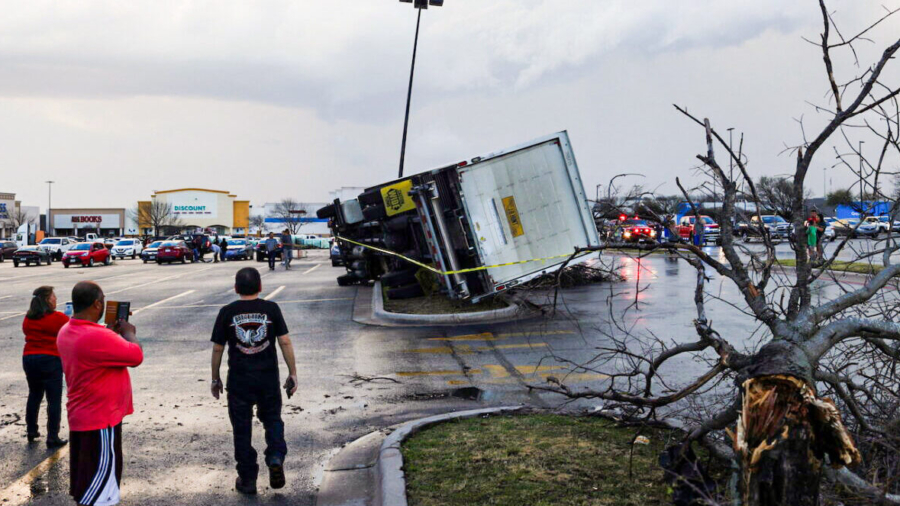
Northern Texas lies in ruins after a violent outbreak of tornadoes tore through rural communities and suburban neighborhoods, claiming at least two lives and obliterating dozens of homes. The destruction unfolded overnight, catching residents off guard as fast-moving storms ripped roofs from structures, flipped vehicles, and left entire blocks unrecognizable.
This isn’t the first time tornadoes have struck the region, but the sudden intensity and human toll of this latest event have reignited conversations about preparedness, warning systems, and the long-term resilience of communities in Tornado Alley.
Tornadoes Strike
With Little Warning
The National Weather Service issued tornado watches hours before the storms hit, but the transition from alert to touchdown was alarmingly fast. In Archer County, one of the hardest-hit areas, a confirmed EF-3 tornado touched down shortly after 10 p.m., carving a path more than 10 miles long with winds estimated between 136 and 165 mph.
Residents reported having mere minutes—or in some cases, seconds—to react. “I heard this roaring, like a freight train,” said Marcus Langston, a homeowner in Jacksboro. “By the time I made it to the closet, the roof was gone. Glass and wood were flying. My wife was screaming.”
Such accounts are tragically common in sudden tornado events. The short window between sirens and impact underscores a critical flaw in current alert systems: even when technology works, human response time doesn’t always match the speed of nature.
Local emergency management officials admit that rural areas face unique challenges. Sirens don’t cover every mile, and cell phone alerts sometimes lag. “We’re doing our best, but geography and infrastructure limitations mean some people won’t get warnings in time,” said a spokesperson from the North Central Texas Emergency Operations Center.
At Least Two Fatalities Confirmed
As daylight broke over the region, the full scale of the tragedy emerged. Authorities confirmed at least two deaths—one in Montague County and another in Clay County. Both victims were found in the wreckage of their homes, which had been lifted from foundations and reduced to splinters.
The deceased have not yet been officially named, pending notification of next of kin. However, early reports suggest both were middle-aged adults who lived in single-family homes with limited shelter options.
Multiple injuries have also been reported, with at least 14 people transported to area hospitals. Several remain in critical condition with trauma from flying debris and structural collapse.
Search and rescue teams, including K-9 units and drone operators, spent the morning combing through collapsed structures. In one scene near the town of Bryson, rescuers pulled a child alive from under a collapsed garage beam—credited to quick GPS location tracking via a smartwatch the child was wearing.
“We’re seeing miracles in the wreckage,” said one paramedic on-site. “But we’re also seeing how thin the line is between survival and loss when a tornado hits directly.”
Homes and Infrastructure Wiped Out
Survey teams from FEMA and the Texas Division of Emergency Management are now documenting the damage. Early estimates suggest over 70 homes have been destroyed, with dozens more suffering severe damage. Mobile home parks—particularly vulnerable in high winds—were decimated.
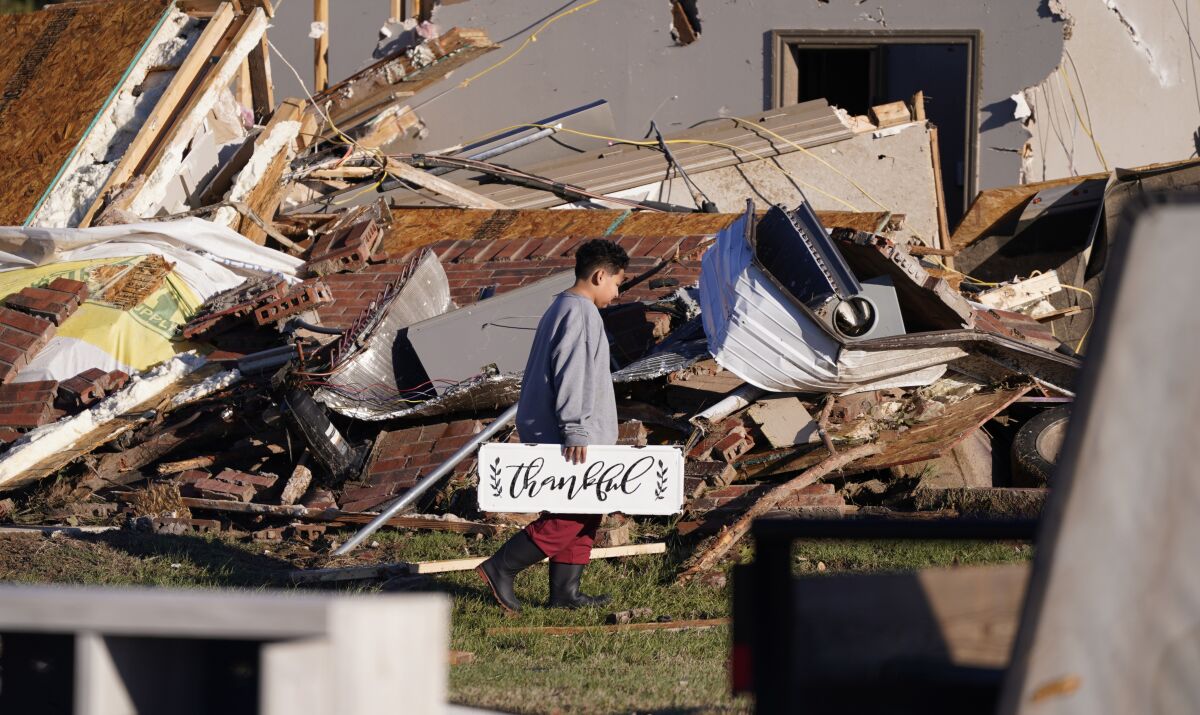
In one Jacksboro mobile home community, every unit was either destroyed or rendered uninhabitable. “These homes aren’t anchored to withstand EF-2 or higher winds,” said structural engineer Diane Ruiz, who surveyed the area. “When you see entire rows flipped or disintegrated, it’s a reminder that building codes haven’t kept up with storm intensity.”
Beyond residential damage, critical infrastructure has been compromised. Power lines are down across three counties. Water systems in Bowie and Henrietta are under boil notices due to broken mains. Roads are blocked by debris, delaying relief efforts.
Local schools, closed for the week, are being repurposed as emergency shelters. The Red Cross has deployed mobile units, providing food, water, and emotional support to displaced families sleeping on cots.
Emergency Response Mobilizes
Within hours of the storms passing, mutual aid agreements activated across North Texas. Fire departments from Wichita Falls, Denton, and Fort Worth sent crews equipped with hydraulic rescue tools and communication gear. The Texas National Guard is assessing whether to deploy additional personnel.
Coordination remains a challenge. Rural roads, now littered with downed trees and power poles, are difficult to navigate. Some communities remain isolated without power or cell service.
“We’re using ham radios to relay messages,” said a volunteer with the North Texas Community Response Team. “It feels like we’ve gone back 30 years in terms of communication during a disaster.”
One bright spot: social media has played a crucial role in connecting survivors with help. A grassroots Facebook group—“North Texas Storm Relief 2024”—has already matched over 200 families with temporary housing, donated supplies, and transportation.
Still, officials warn against impromptu volunteer efforts. “We appreciate the heart, but untrained people entering damaged zones can become victims themselves,” cautioned a FEMA field coordinator. “Stick to donating or volunteering through official channels.”
Why Northern Texas Is So Vulnerable
Northern Texas sits in the heart of Tornado Alley—a stretch of the central U.S. notorious for violent springtime storms. But recent years have seen a shift: tornadoes are forming earlier, lasting longer, and striking in clusters.
Climate scientists point to warming Gulf waters as a contributing factor. “Warmer moisture feeds instability,” said Dr. Lena Cho, a meteorologist at Texas A&M. “That doesn’t mean more tornadoes overall, but it does increase the likelihood of high-impact, long-track events—exactly what we saw here.”
Urban sprawl adds to the risk. As cities like Denton and McKinney expand northward, development encroaches on rural areas with fewer shelters and older infrastructure. Many homes still lack storm shelters or safe rooms.
Furthermore, mobile homes make up nearly 12% of housing in affected counties—well above the national average. These structures account for a disproportionate number of tornado fatalities despite representing a smaller share of the population.
Survivors Share Stories of Loss and Luck
Among the debris, personal stories are beginning to surface—some heartbreaking, others hopeful.
In one instance, a family of five survived by sheltering in a drainage culvert behind their home. “We heard the house go,” said Maria Gutierrez. “When we crawled out, nothing was left but the concrete slab.”
Another resident, Carl Dobbins, lost his home but saved his neighbor’s dog. “I saw it trapped under a beam. I didn’t think—I just pulled. That dog saved me as much as I saved it. Gave me something to focus on.”
Not everyone had a refuge. In Montague County, a retired couple died when their attic collapsed. They had no basement and were unable to reach a storm shelter in time.
These stories highlight a painful truth: survival often comes down to luck, location, and preparation.
Building Resilience After the Storm
In the weeks ahead, recovery will shift from emergency response to long-term rebuilding. But this moment also presents an opportunity to strengthen community resilience.
Experts recommend several concrete steps:
- Mandate storm shelters in new construction, especially in high-risk zones.
- Upgrade warning systems to include automated reverse 911 calls, app alerts, and solar-powered sirens.
- Invest in retrofitting programs to help homeowners reinforce roofs and anchor mobile homes.
- Expand public shelters in rural areas, including storm-resistant community centers.
Some cities, like Moore, Oklahoma, have already implemented such policies after devastating tornadoes. Northern Texas now faces the same crossroads.
“We can’t stop tornadoes,” said emergency planner Jamal Wright. “But we can stop them from being this deadly. Every home rebuilt is a chance to build smarter.”
What You Can Do to Stay Safe
If you live in or near Tornado Alley, preparation is not optional—it’s essential.
- Know your safe place: A basement, storm cellar, or interior room on the lowest floor.
- Have a plan: Practice it with your family, including pets.
- Stay informed: Use a weather radio or trusted app with push alerts.
- Don’t rely on sirens alone: They may not reach you indoors or at night.
- Prepare a go-bag: Include water, medications, flashlight, and important documents.
And if a tornado warning is issued: take cover immediately. Do not wait to see the storm.
The scars left by these tornadoes will last for years. But from the wreckage, communities are already showing signs of strength—neighbors helping neighbors, strangers donating time and supplies, officials vowing to do better.
For the families who lost loved ones, the pain is fresh. For survivors, the challenge is just beginning. But one thing is clear: when the next storm comes, preparation and awareness could mean the difference between life and death.
FAQ
How many people died in the northern Texas tornadoes? At least two fatalities have been confirmed in Montague and Clay Counties, with more victims potentially still unaccounted for in the wreckage.
Which areas in northern Texas were hit hardest? Archer, Montague, and Clay Counties suffered the most damage, with Jacksboro, Bryson, and parts of Henrietta experiencing widespread destruction.
Were there any tornado warnings before the storms hit? Yes, the National Weather Service issued tornado watches hours in advance, but the rapid development of tornadoes gave residents minimal time to react.
How strong were the tornadoes in northern Texas? Preliminary assessments indicate at least one EF-3 tornado with winds over 130 mph. Additional tornadoes ranged from EF-1 to EF-2.
What should I do if a tornado warning is issued? Immediately seek shelter in a basement or an interior room on the lowest floor, away from windows. Use mattresses or heavy blankets for protection from debris.
Are mobile homes safe during tornadoes? No. Mobile homes are extremely dangerous during tornadoes, even with straps or anchors. Evacuating to a sturdy shelter is strongly advised.
How can I help tornado survivors in northern Texas? Donate to reputable organizations like the Red Cross, Salvation Army, or local community relief funds. Avoid spontaneous volunteer trips to disaster zones.
What mistakes should you avoid? Avoid generic choices, weak validation, and decisions based only on marketing claims.
What is the next best step? Shortlist the most relevant options, validate them quickly, and refine from real-world results.