The altar wasn’t sacred. The vows weren’t sincere. And the blood—oh, the blood was inevitable.
When Euphoria aired its surreal, nightmarish wedding sequence between Nate Jacobs and Cassie Howard, it didn’t just break hearts—it shattered the illusion of romantic catharsis the series had been nudging toward. Instead, what unfolded was less a union and more a psychological bloodbath: a Red Wedding in spirit, if not in literal swordplay. No Freys, no Boltons—but plenty of betrayal, trauma, and emotional carnage. This wasn’t just a breakup. It was an execution.
And the show did it on purpose.
The Wedding That Was Never Meant to Happen
From the moment Nate proposed—under dubious circumstances, mid-breakdown, fueled more by obsession than love—it was clear this wedding wasn’t about love. It was about control. Possession. A final act of dominance in a relationship built on manipulation, insecurity, and toxic codependency.
Cassie said yes not because she believed in their future, but because she’d spent seasons trying to earn validation from men who saw her worth as conditional. Nate’s proposal was her last shot at being “enough”—the perfect girlfriend, the forgiving lover, the woman who could “fix” him. But Euphoria doesn’t do redemption arcs that easy.
So the wedding wasn’t a celebration. It was a trap. A stage.
And like any great tragedy, it had to end in blood.
Why This Was Euphoria’s Version of the Red Wedding
Call it homage. Call it inevitability. But Euphoria’s wedding massacre shares DNA with Game of Thrones’ most infamous episode—the Red Wedding—not because of body counts, but because of broken trust and narrative whiplash.
Consider the parallels:
- False sense of safety: Both events begin with ritual—vows, music, dancing. Guests let their guard down.
- Betrayal from within: In the Red Wedding, the Freys turn on the Starks. In Euphoria, Cassie is betrayed by the man she’s marrying—and by her own illusions.
- Psychological violence as the real weapon: No one dies, but someone dies inside. The trauma is the point.
- Foreshadowing ignored: Viewers saw the cracks. Cassie didn’t want to see them.
The Red Wedding wasn’t about shock value. It was about proving that in Westeros, oaths mean nothing. In Euphoria, the wedding sequence proves something similar: in a world ruled by insecurity and performance, love is just another role we play—until the mask slips.
And when it does, the fallout is catastrophic.
The Real Blood Was Emotional, Not Physical
No one got stabbed. No knives came out. And yet, by the time the episode ended, every character involved was emotionally eviscerated.
Nate’s breakdown at the altar—screaming about Maddy, accusing Cassie of betrayal—wasn’t just anger. It was the collapse of a carefully constructed identity. He didn’t marry Cassie to love her. He married her to prove he wasn’t the monster everyone thought he was. When the façade cracked, he lashed out like a cornered animal.
Cassie, meanwhile, stood there in white, her dream dissolving in real time. Her tears weren’t just for the failed wedding—they were for the years spent shrinking herself, apologizing for existing, and believing love meant enduring pain.
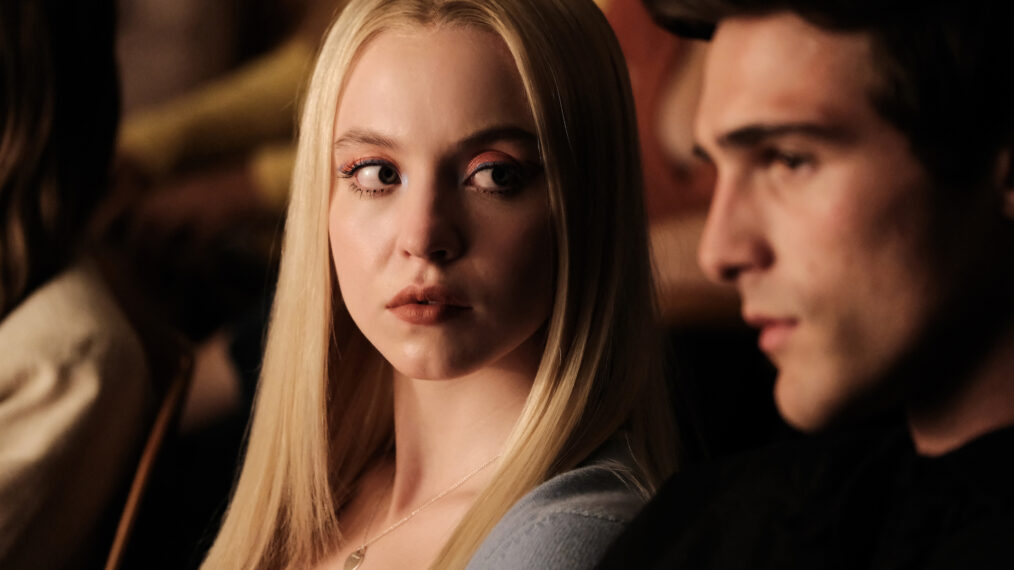
And Maddy? Watching from the pews, mascara streaming, wasn’t just a scorned ex. She was the ghost of Nate’s past—the truth he couldn’t outrun.
The blood wasn’t on the floor. It was in their eyes, their voices, the silence after Nate stormed out. That’s where Euphoria excels: turning emotional collapse into visceral spectacle.
Symbolism in the Details: White Dresses, Shattered Vows, and Empty Chairs
Euphoria doesn’t waste a frame. Every visual in the wedding sequence screamed meaning.
The Dress Cassie’s wedding gown—virginal white, high-necked, almost suffocating—wasn’t a symbol of purity. It was a costume. A performance of the “good girl” she thought Nate wanted. By the end, she’s still wearing it, but it’s askew, dirtied, haunted. Like her.
The Music Instead of a traditional processional, the score was eerie, pulsing—a remix of earlier themes, distorted. It felt like a horror soundtrack, not a love story. The show was warning us: this is not a happy ending.
The Empty Chairs Rows of seats with no guests. Was it a dream? A fantasy? A waking nightmare? The emptiness suggested something deeper: that this union was never real. No one truly believed in it. Not even Nate and Cassie.
And then there was the final shot: Cassie alone in the hall, lights flickering, the cake untouched. A tableau of emotional desolation.
How the Wedding Exposed the True Nature of Nate and Cassie’s Relationship
Let’s be clear: Nate and Cassie were never in love.
They were trauma-bound.
Nate, raised under the shadow of his father’s abuse and his own violent impulses, equates control with love. Cassie, shaped by her mother’s warped views on relationships and her own relentless need for approval, equates attention with affection.
They didn’t heal each other. They amplified each other’s worst tendencies.
- Nate used Cassie to feel powerful.
- Cassie used Nate to feel chosen.
When the wedding imploded, it wasn’t because of an affair or a misunderstanding. It was because the foundation was rotten. You can’t build a marriage on insecurity, jealousy, and repression. And Euphoria knew that.
The show didn’t punish Cassie for loving Nate. It punished the idea that love like theirs could ever be redemptive.
Why the Show Needed This Ending
For all its glamour and melodrama, Euphoria has always been a cautionary tale.
It’s not about who gets the guy or who survives prom. It’s about the cost of performative identity, the danger of emotional repression, and the illusion that love will save you.
The wedding scene—the collapse, the screaming, the abandonment—was necessary because:
- It shattered the fantasy that Cassie could “fix” Nate.
- It exposed Nate’s incapacity for healthy intimacy.
- It forced Cassie into a moment of truth: Who is she without a man defining her?
- It rejected the trope that love conquers all—even abuse.
- It reminded viewers that healing isn’t linear, and some relationships don’t deserve to be saved.
This wasn’t just a breakup. It was an intervention—delivered in the language of trauma, scored like a horror film, filmed like a waking nightmare.
What Happens Now? The Fallout We’re Still Feeling
Post-wedding, the ripple effects are everywhere.

- Cassie is alone, but for the first time, she’s not performing. Her arc may finally pivot toward self-worth, not external validation.
- Nate is more isolated than ever. With Maddy gone and Cassie broken, his only relationship is with his rage.
- Maddy is free—but not unscarred. She loved Nate, hated him, and now must reckon with why she stayed so long.
- The audience is left raw. Not because we wanted them to marry, but because we wanted someone—anyone—to break the cycle.
The wedding wasn’t an ending. It was a detonation.
And like the Red Wedding, its impact will echo through seasons to come.
Euphoria Doesn’t Reward Fantasy—It Dissects It
Other teen dramas give us fairy tales. Euphoria gives us autopsies.
It doesn’t show us love as salvation. It shows us love as exposure—the moment when we see ourselves, and each other, without filters.
The wedding scene worked because it refused to look away. It forced Cassie—and us—to confront the truth: that staying in a relationship out of fear, obligation, or hope isn’t love. It’s self-betrayal.
And sometimes, the most radical act isn’t saying “I do.” It’s walking away in silence, still in your wedding dress, knowing you deserve better.
Euphoria didn’t stage a Red Wedding for shock value.
It did it because, in a world of filters and fakery, blood is the only thing that reminds us we’re still alive.
If you’re still trying to love your way out of pain—stop. The altar isn’t where healing happens. It’s where illusions die.
Why did Nate really propose to Cassie? Nate proposed not out of love, but to construct a narrative of normalcy. He wanted to prove—to himself and others—that he wasn’t the violent, insecure person he feared he was. Marrying Cassie was an attempt to control his image and suppress his demons.
Was the wedding real or a fantasy? The wedding likely existed in a blurred space—part fantasy, part symbolic dream sequence. Its surreal tone, sparse guests, and abrupt violence suggest it wasn’t a literal event, but a psychological manifestation of Cassie’s hopes and fears.
How does this moment change Cassie’s character? This moment shatters Cassie’s reliance on male validation. Post-wedding, she begins to confront her self-worth, setting the stage for potential growth beyond being “the girlfriend” of someone else’s story.
Did Maddy have a right to be at the wedding? Emotionally, yes. Maddy was a core part of Nate’s past and Cassie’s pain. Her presence wasn’t about protocol—it was about truth. She represented the history Nate refused to face.
Is Nate capable of change? Possibly—but not without serious intervention. His behavior stems from deep trauma and repressed sexuality, but his repeated violence and control suggest he’s stuck in cycles he doesn’t yet understand, let alone want to break.
What makes this scene different from other TV breakups? Most breakups are private, quiet. This was public, theatrical, and symbolic. The wedding setting turned a personal collapse into a mythic failure—a ritual sacrifice of illusion.
Will Nate and Cassie ever reconcile? Unlikely in a romantic sense. The wedding wasn’t a detour—it was a verdict. Their relationship served its narrative purpose: to show the cost of loving the wrong person for the wrong reasons. Reconciliation would undermine that message.
FAQ
What should you look for in Euphoria Stages Its Own Red Wedding: The Brutal Truth Behind Nate and Ca? Focus on relevance, practical value, and how well the solution matches real user intent.
Is Euphoria Stages Its Own Red Wedding: The Brutal Truth Behind Nate and Ca suitable for beginners? That depends on the workflow, but a clear step-by-step approach usually makes it easier to start.
How do you compare options around Euphoria Stages Its Own Red Wedding: The Brutal Truth Behind Nate and Ca? Compare features, trust signals, limitations, pricing, and ease of implementation.
What mistakes should you avoid? Avoid generic choices, weak validation, and decisions based only on marketing claims.
What is the next best step? Shortlist the most relevant options, validate them quickly, and refine from real-world results.