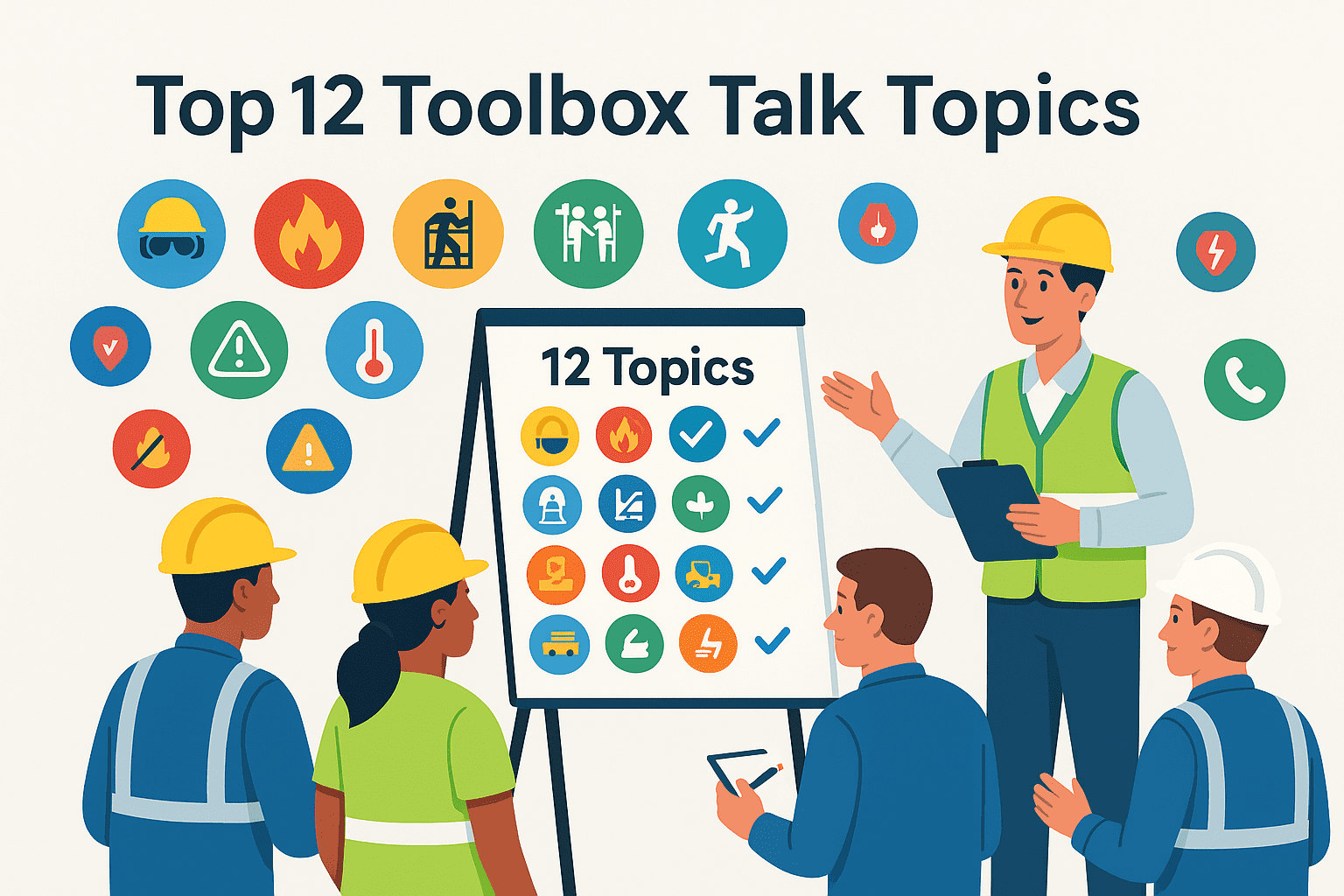
Workers zone out during safety meetings. You’ve seen it—eyes on phones, half-listening, treating the routine like a time-waster. That’s not their fault. It’s a failure of delivery. The fix? Short toolbox talk topics that are sharp, relevant, and grounded in real work. Not fluff. Not recycled lectures. Just five to ten minutes of focus that stick.
The best toolbox talks don’t preach. They connect. They answer: “What’s in this for me?” and “Could this save my back, my hand, my life?” When trimmed of filler and tuned to daily tasks, these micro-sessions become the most reliable safety tool on site.
Below are high-impact, concise topics proven to spark attention, drive behavior change, and align with real-world hazards.
Why Short Toolbox Talks Work Better
Long safety meetings lose momentum. Attention spikes in the first 5 minutes—then fades. Short toolbox talks leverage that window. They’re designed for immediacy: delivered near the point of work, focused on one hazard, and tied to real-time conditions.
A 7-minute talk on ladder stability before climbing is more effective than a 30-minute weekly recap. Why? Context. Workers see the ladder. They’re about to use it. The risk is visible.
Short talks also reduce scheduling friction. Supervisors don’t need to block out hours. Crews don’t resent the interruption. A quick huddle before a task becomes routine—like putting on gloves.
But brevity demands precision. Every word must earn its place. No vague warnings. No “always be safe” platitudes. Instead: - Specific hazard - Clear action - Real consequence
Example: Instead of “Be careful with power tools,” say: “If the blade guard on that circular saw isn’t moving freely, stop work. Tag it. Report it. That guard is your last defense if the blade binds.”
That’s the standard. That’s what makes short talks stick.
Top 10 Short Toolbox Talk Topics (With Examples)
#### 1. Trip and Fall Hazards on Walking Surfaces Focus: Housekeeping and awareness Duration: 6 minutes
Example: Point to a muddy walkway near the dumpster. Ask: “Who’s walked through here today? Did you watch your step?” Then: “One spill, one misstep—ankle fracture. That’s 4 weeks off. Today, clean it. Tomorrow, same rule: see a hazard, fix it or flag it.” Action: Assign cleanup, mark slippery areas.
#### 2. Proper Use of Safety Glasses Focus: PPE compliance Duration: 5 minutes
Mistake: Workers remove glasses to wipe sweat, then forget to put them back. Talk: Hold up scratched, fogged-up glasses. “These don’t protect you. If they’re fogging, use anti-fog spray. If scratched, swap them. No exceptions—even for 30 seconds.” Action: Inspect eyewear during tool checks.
#### 3. Back Safety During Lifting Focus: Body mechanics Duration: 7 minutes

Reality: Workers lift awkward loads daily—bags of grout, reels of cable. Talk: Demonstrate wrong vs. right form. “Bend knees, keep back straight. If it’s over 50 lbs, get help or use a cart. No heroics.” Action: Audit lifting tasks on site. Identify where lift aids are missing.
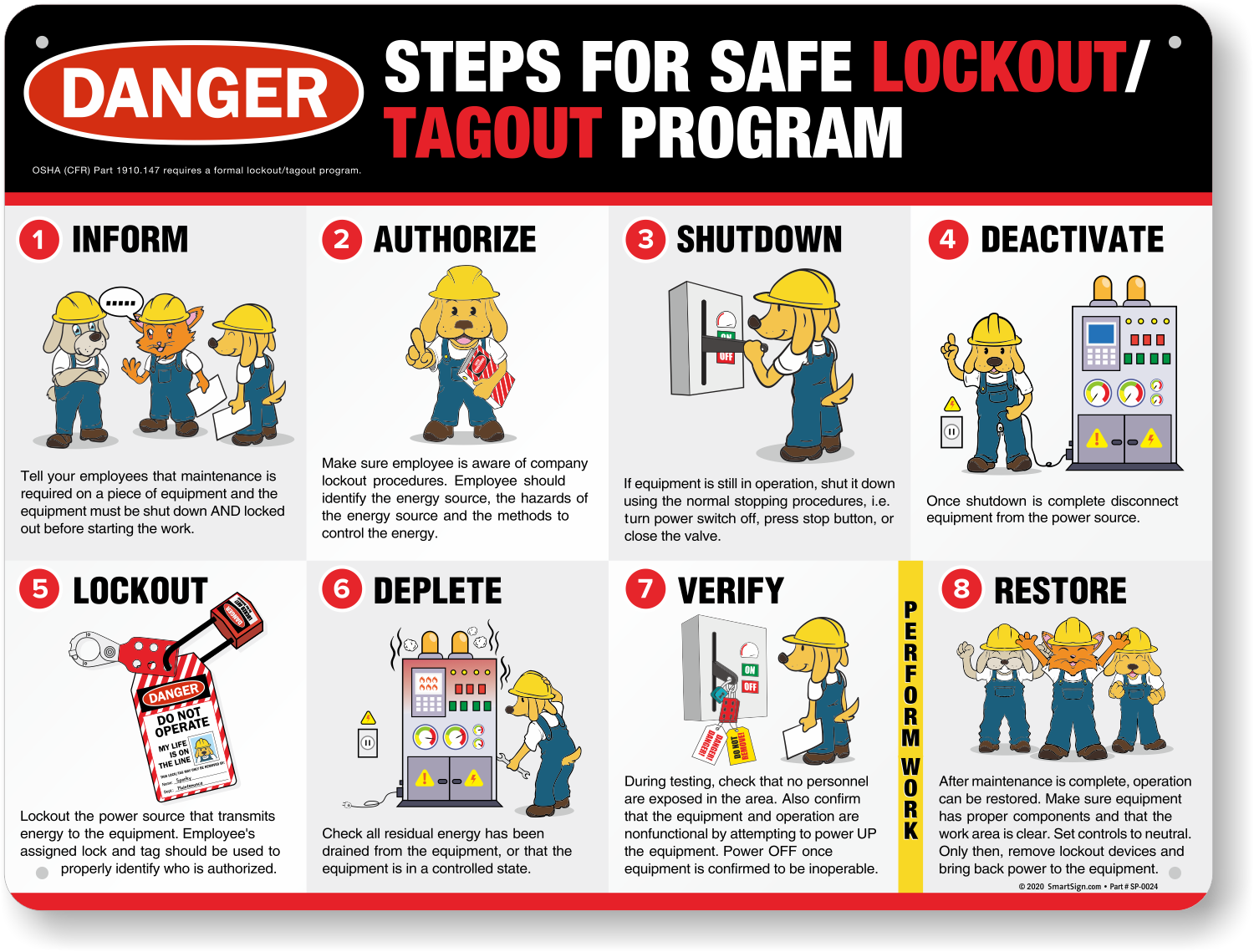
#### 4. Lockout/Tagout for Minor Repairs Focus: Energy control Duration: 8 minutes
Common lapse: “Just changing a blade—no need to lock out.” Talk: “Last month, a worker lost two fingers because the conveyor powered on during cleaning. No lockout. One second. Two fingers. Could you afford that?” Action: Review LOTO steps for common tasks. Verify locks are on-site.
#### 5. Hand Tool Inspection Before Use Focus: Proactive maintenance Duration: 5 minutes
Example: Show a cracked hammer handle. “This looks stable. It’s not. It could shatter on impact—send metal flying.” Rule: “Check every tool. Cracks, frayed cords, loose heads? Tag it out. No ‘I’ll fix it later.’” Action: Daily pre-use checks. Use a quick checklist.
#### 6. Heat Stress Signs and Response Focus: Environmental hazard Duration: 7 minutes
Talk: “Dizziness? Nausea? Don’t power through. That’s heat exhaustion. Tell your supervisor. Drink water. Sit in the shade.” Prevention: Rotate high-exposure tasks, monitor forecasts, provide cooling zones. Action: Assign a heat watcher on hot days.
#### 7. Working at Heights – Harness Anchor Points Focus: Fall protection Duration: 6 minutes
Myth: “I’m only up there for 10 minutes—I don’t need it.” Truth: “90% of fatal falls happen in under 5 minutes. Your harness is useless if not tied to a certified anchor.” Action: Verify anchor points before any climb.
#### 8. Noise Exposure and Hearing Protection Focus: Long-term health Duration: 5 minutes
Fact: “You won’t feel hearing loss. It builds slowly. By the time you notice, it’s permanent.” Rule: “If you have to shout to hear someone 3 feet away, wear ear protection.” Action: Post noise level zones. Enforce compliance.
#### 9. Emergency Spill Response (Oil, Chemicals) Focus: Immediate action Duration: 7 minutes
Scenario: “You see a diesel leak from a generator. What do you do?” Steps: Contain, notify, clean with absorbents, report. Don’t: Hose it down—spreads contamination. Action: Locate spill kits. Confirm all know where they are.
#### 10. Communication During Equipment Operation Focus: Awareness and coordination Duration: 6 minutes
Hazard: Backing vehicles, crane lifts, moving plant. Rule: “No hand signals? Stop the job. Operators must see spotters. Spotters must have clear line of sight.” Action: Reinforce signal protocols daily.
How to Deliver Short Talks That Stick
A good topic isn’t enough. Delivery matters. Follow this workflow:
- Pick the Right Moment
- Don’t schedule talks for Monday mornings. Hold them before the relevant task. Talk about ladder safety right before roof work.
- Use What’s Visible
- Point to actual tools, conditions, or hazards. “Look at that extension cord—crossing the walkway. Trip hazard. Fix it now.”
- Engage, Don’t Lecture
- Ask questions: “Have you seen this before?” “What would you do?” Listen. Respond.
- Keep a Log
- Record topic, date, attendees. Not for bureaucracy—for tracking repeat issues. If you’re doing the same talk monthly, the message isn’t sticking.
- Rotate Responsibility
- Let experienced workers lead occasionally. Peer-to-peer delivery builds ownership.
Common Mistakes to Avoid

- Repetition Without Variation
- Talking about PPE every week with the same script? It becomes white noise. Change the angle: one week focus on fit, next on inspection, next on storage.
- Ignoring Crew Feedback
- Workers know the real risks. Ask: “What’s the scariest near-miss you’ve seen?” Use their input to shape future talks.
- Skipping Documentation
- No record? Then it didn’t happen—at least not for compliance. A simple sign-in sheet proves due diligence.
- Using Jargon
- “Ensure compliance with OSHA 1926.1053” loses people. Say: “Guardrails save lives. If it’s over 6 feet, it needs one.”
- One-Size-Fits-All
- A talk for electricians shouldn’t be reused for landscapers. Customize to the crew’s daily tasks.
Real-World Use Cases
Case 1: Roofing Crew Problem: Frequent slips on wet shingles. Talk: “Wet shingles = ice rink. Use toe boards. Keep tools secured. One hand for climbing at all times.” Result: Zero slip incidents over next 3 weeks.
Case 2: Warehouse Team Problem: Forklift blind spots causing near-misses. Talk: “If you can’t see the operator’s face, he can’t see you. Stop. Make eye contact.” Result: Spotters assigned for high-traffic zones.
Case 3: Electrical Subcontractor Problem: Workers bypassing cord guards on power strips. Talk: “That melted plug? That’s how fires start. No modified cords. No daisy-chaining.” Result: All non-compliant cords replaced.
Final Checklist: Is Your Talk Effective?
Use this before every session:
✅ Focused on one specific hazard ✅ Less than 10 minutes long ✅ Includes a real example or visual ✅ Ends with a clear action step ✅ Engages workers with a question or story ✅ Documented with sign-in sheet
If it misses any, revise.
Short toolbox talks aren’t a compliance checkbox. They’re a frontline defense. Done right, they change behavior—one conversation at a time. Pick a hazard. Gather the crew. Speak plainly. Act immediately.
Start tomorrow: choose one topic from the list, deliver it on-site, and watch attention shift. That’s the power of concise, relevant safety communication.
Frequently Asked Questions
What makes a good short toolbox talk topic? It’s specific, timely, and tied to a real hazard workers face daily—like ladder use, PPE, or lifting techniques.
How long should a toolbox talk be? Ideal length is 5 to 10 minutes. Long enough to explain risk and action, short enough to hold attention.
Can workers lead toolbox talks? Yes—and they should. Peer-led sessions increase engagement and build safety ownership across the team.
Do toolbox talks need to be documented? Yes. A sign-in sheet with topic, date, and attendees proves compliance and helps track recurring issues.
What if workers don’t take talks seriously? Make them relevant. Use real incidents, visible hazards, and direct questions. If it feels like a script, it won’t stick.
Should we repeat topics? Yes, but vary the approach. Revisit key hazards quarterly, but change examples, stories, or delivery method.
Where should toolbox talks be held? On-site, near the work area. Context boosts retention—talking about scaffolding safety at the base of a scaffold, for example.
FAQ
What should you look for in Short Toolbox Talk Topics That Actually Engage Workers? Focus on relevance, practical value, and how well the solution matches real user intent.
Is Short Toolbox Talk Topics That Actually Engage Workers suitable for beginners? That depends on the workflow, but a clear step-by-step approach usually makes it easier to start.
How do you compare options around Short Toolbox Talk Topics That Actually Engage Workers? Compare features, trust signals, limitations, pricing, and ease of implementation.
What mistakes should you avoid? Avoid generic choices, weak validation, and decisions based only on marketing claims.
What is the next best step? Shortlist the most relevant options, validate them quickly, and refine from real-world results.